You posted something yesterday. It got maybe thirty likes. A couple of saves. Then nothing. Today it is buried under a hundred other posts and nobody is talking about it. You already moved on to thinking about what to post next.
This is the reality for most creators right now. And the frustrating part is that the content was probably good. The problem was not the quality. The problem was that you said everything once and then walked away.
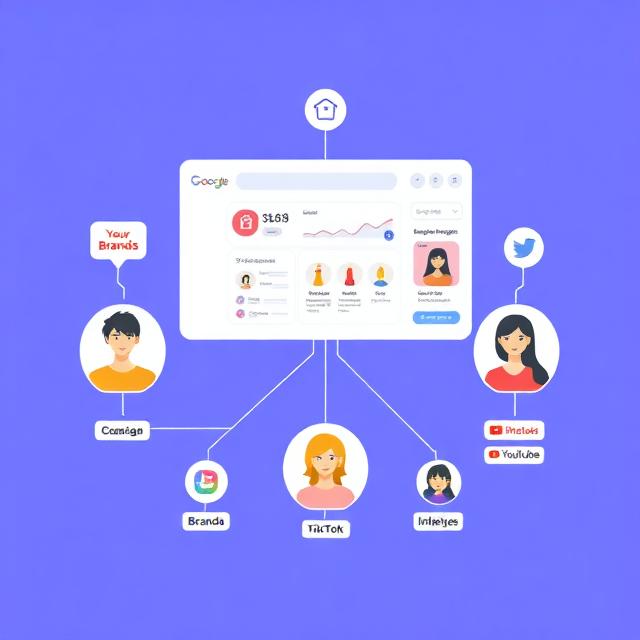
The creators who are actually building something real online are doing something different. They take one topic and they milk it. Not in a spammy way. In a smart way. They cover it from five different angles, in five different formats, across multiple platforms. That is Your Topics Multiple Stories in practice. And it works far better than anything else I have seen.
Your Audience Is Not One Person
Think about who follows you. Some of them love tutorials. Some only watch short videos and never read captions. Some want the honest personal story, the failure, the messy part. Some want numbers and data. Some are just there to be entertained.
If you post one type of content about one topic one time, you are reaching maybe one segment of your audience. Everyone else scrolls past because that particular format or angle just did not land for them at that moment.
A real multi-story content strategy solves this. You take one topic and you build different doors into it. Different people walk through different doors. And suddenly the same topic is reaching your whole audience instead of just a slice of it.
Understanding Multi-Story Content on Social Media
One Topic, Many Directions
It isn’t a complex concept. Choose a topic which your audience would care about. Rather than composing a single post and concluding, you generate a range of content on the same subject from entirely different perspectives.
Consider yourself a creator of travel. Southeast Asia is a vlog topic on budget travel. Now here is what that looks like when you apply Your Topics Multiple Stories to it. You do a TikTok showing the three biggest mistakes you made that cost you money. You do an Instagram carousel with your actual budget breakdown from one month. You write a longer caption post about the moment you almost gave up on the trip. You post a behind the scenes story showing what your hostel actually looked like versus what the photos showed. You share a LinkedIn post about what solo travel taught you about decision making under pressure.
That’s still just one subject. Low-cost travel in Southeast Asia. As a result, you end up with five different pieces of content, each useful, interesting, or compelling. Every article attracts a distinct type of reader/viewer.
Why Cramming It Into One Post Never Works
A post which contains everything becomes a mess. So, make sure your post is concise. This is the point at which you should simply cut out an over-the-top completely and take this more seriously. Either readers get bored halfway through or they don’t know what to do with it.
Dividing it up allows each content section to perform one function. One emotion. One takeaway. That is so much easier for your audience to process and share.
Each Platform Needs a Different Version
The users of Instagram, TikTok, and LinkedIn are quite different. The people on these channels behave differently. Individuals expect distinct things from the content they consume.
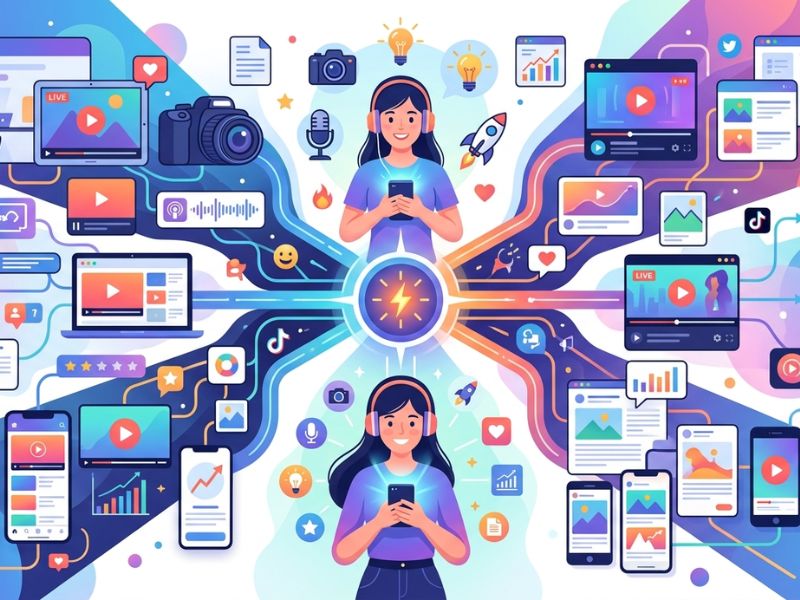
The social media storytelling strategy is not a repeated content disseminating strategy. It requires the same idea and translates it. TikTok gets the fast, casual, hook driven version. Instagram gets the visual, save worthy version. LinkedIn gets the professional, insight driven version. Same story. Three different languages.
Why Multi-Story Content Works for Social Media
People Like Being in the Middle of Something
There is a reason people binge watch shows. They are invested. They want to see what happens next. Multi-story content creates that same feeling on a much smaller scale.
When someone watches your video and then starts to see you give more of the same or similar content in the following days, they feel like they are in on something. They’re actually reading relevant content.They are invested in where the story goes. That pulls them back to your profile again and again.
More Angles Means More Reactions
Your tutorial post gets saved because it was useful. Your personal story gets comments because someone went through the same thing. Your hot take gets shared because it sparked an argument in someone’s group chat. Your behind the scenes post gets DMs because it feels real.
Each angle triggers a different reaction. And you need all of those reactions, saves and shares and comments and DMs, to grow. No single post can generate all of them. But a series of posts on the same topic absolutely can.
You Stop Looking One Dimensional
Creators who only post one type of content start to feel flat after a while. You know them for one thing and nothing else. There is only so deep a connection your audience can build with someone like that.
When you use a multi-story content strategy, your audience gets to see more of you. They see you teach. They see you mess up. They see you have opinions. They see you laugh at yourself. That is what makes people actually like a creator, not just follow them.
Platforms Push You More When You Stay Consistent
Every major platform has an algorithm that watches what topics you create around. The more consistently you post about a niche topic, the more the platform begins to identify your content type. The more it encourages your content to seek individuals that have an active interest in that topic.
Your Topics Multiple Stories is not just a creative strategy. It is an algorithmic one. You are training the platform to know who to show your content to.
Step-by-Step Framework for Social Media
Step 1: Find a Topic That Has Legs
Not every topic can carry multiple pieces of content. Something that has sufficient depth and sufficient different angles so that you can keep going without repeating yourself.
Use Google Trends or Creative Center by TikTok to check what’s trending among people right now. Make sure you pick a topic that you are truly interested in as you will be stuck with this topic for a week or two at least. One of the easiest ways to describe your topic is to make a search data-driven suggestion. A trending topic is one that has recent search data like, how the Instagram algorithm changed in 2026, building a brand with no followers, content burnout, or making money as a micro influencer has plenty of material at hand.
Before committing, make sure to go on a test drive. Can you name five different things related to the topic at least? Can you present it in the form of a tutorial, personal story, opinion piece, case study, or myth buster? You have a nice topic for presenting.
Step 2: Write Down Every Angle You Can Think Of
Before you put anything on record or write anything, grab a notebook or blank doc and dump every angle you can think of on this topic on that page. Here are the most effective ones to use.
The how-to angle is practical and gives people a clear action to take. It is the most saved type of content across almost every platform. The personal story angle is you being honest about your own experience, the good parts and the bad parts. People connect with this more than anything else. The case study angle shows what worked for someone else, with real numbers and real context. The myth busting angle attacks a common belief your audience holds and shows them why it is wrong or more complicated than they think. The hot take angle is a strong opinion that not everyone will agree with. It gets shares and comments fast. The data angle uses actual research or statistics to back up a point and builds your credibility. The process angle shows how you actually do something, not the polished version but the real workflow.
Get at least five of these mapped out before you create a single thing.
Step 3: Plan the Order and Timing
The sequence of your posts matters. Don’t just publish your projects in whatever order you created them. Consider what your audience will need to see first to make them hooked and what keeps them satisfied.
Starting with a line that clicks with the audience helps. It could be a hot take, an interesting fact, or a short video with a hook. Subsequently, during the upcoming days, provide more in-depth information. Accounts, manuals and reports. Refrain from flooding social media with posts. It appears unprofessional and also results in unfollows. Leave a gap of about two to three days between posts so each has enough time to breathe until it gathers engagement.
Platforms and Approaches
Carousels Work Better Than Most Creators Think
Carousels are currently one of the most underused formats on Instagram. Individuals browse through them. They save the animals. The extra engagement time is loved by the algorithm. Utilise carousels are useful for step by step guides, lists, fact breakdowns, and anything where you want people to slow down and actually read.
Concentrate each slide’s content on one idea. If there are three things you want to say which are to be put on 1 slide, break it down on 3 slides.
Reels Bring in New People
Reels are how you grow. They get pushed to people who have never heard of you. The hook in the first two seconds either stops someone from scrolling or it does not. Spend most of your creative energy on that opening moment. Once someone stops scrolling, you have them. Make the rest of the video worth their time.
Stories Build the Real Relationship
Stories are not for growth. They are for connection. Your existing audience watches your stories. Use them for honest, unfiltered moments. Polls, questions, quick updates, behind the scenes clips. Stories are where people decide whether they actually like you or just follow you.
TikTok
The Algorithm Rewards You for Staying on Topic
When viewers interact with one TikTok video, many more from that creator will be pushed. This is a genuine gift for anyone using Your Topics Multiple Stories. Post consistently around your topic and TikTok will start building you a real audience that keeps seeing more of your content.
Make the Series Feel Intentional
Label your series. Say “Part 2” or “I talked about this last week and here is what I missed.” Give people a reason to look for your previous video and your next one. A viewer who watches three videos in your series is far more valuable than three viewers who each watch one.
Stop Ignoring This Platform
If any part of your audience is made up of professionals, business owners, or people working a nine to five who want to do something different, LinkedIn is sitting there completely untapped for most creators.
The tone shifts here. You are not being casual. You are being thoughtful. You share what you genuinely learned, not just what sounds good. You talk about real decisions, real mistakes, real numbers when you have them.
Repurposing Works Brilliantly Here
Content repurposing for social media is almost effortless on LinkedIn. Consider your TikTok Video. Take that, strip the casualness and add more professional detail. You will have a link in post with a completely different audience that would never find you on Tik Tok.
Real-World Examples
The Creator Who Turned One Idea Into a Month of Content
A wellness creator I follow closely had one simple topic. She wanted to talk about quitting caffeine. Instead of one video, she built a whole series around it. The first post was a short TikTok asking if anyone else felt like caffeine was controlling them. That got traction. Then she posted a detailed Instagram carousel breaking down the science of caffeine dependency. Then a personal story on Instagram about her first week without coffee, headaches and all. Then a TikTok showing what her energy levels actually looked like after three weeks. Then a LinkedIn post about what the experience taught her about habit formation.
Five pieces of content. One topic. Her follower count grew noticeably that month and the caffeine series is still being shared.
The Follow-Up Post That Outperforms the Original
This happens constantly. A creator posts something that gets a bit of a reaction. Nothing massive, but people have opinions. They respond in the comments. They share it with disagreement. In addition to the original post, the creator leaves another post that addresses those comments and suddenly this second post does three times the number of the first.
The follow-up works because people are already emotionally engaged. They commented or shared the first post. Now they want to see what you say next. That is the multi-story model happening naturally. You can engineer it on purpose.
Covering the Same Topic Across Different Formats
Creators with the most loyal audiences understand that not everyone consumes content the same way and embrace differentiation. Some followers save every carousel. Some only watch Reels. Some read every caption. Some just look at the pictures.
When you cover the same topic in multiple formats you are making sure that everyone in your audience gets a version of it in the way they actually want to receive information. Some creators, you will notice, when you look for them, appear to be everywhere, when in fact they’re not posting more than anyone else.
Challenges and Solutions
Your Brand Starts to Feel Inconsistent
You can easily lose your identity, when you are creating in so many different formats across all different platforms. Your TikTok and Instagram have different vibes. Your LinkedIn sounds like a completely different person wrote it.
No matter what platform you’re using, write three or four sentences that describe how you want your content to feel. Your one-of-a-kind sense of humor, the kinds of words you use, your values (and your no-no topics) – that is your brand guide. It does not need to be long. It just needs to exist so you can check yourself against it before you post.
Posting the Same Topic Too Much Gets Annoying
Your audience might tune you out if all your content seems like the same post in a different outfit. The answer is to make sure every post says something new.
If you can summarize your second post with the same sentence as your first, you have not actually changed the angle. You have just changed the words. Go deeper. Go from a different direction. Give people a reason to care about this post even though they already saw the last one.
Posting at the Wrong Time Wastes Good Content
You could have the best piece of content you have ever made and if you post it at two in the morning when your audience is asleep, it gets buried before anyone sees it.
View your analytics regularly. Verify when your posts are receiving maximum engagement. Look at the specific days and times when they did. Post your strongest content during those windows. Save your lighter content for the off-peak times.
Best Practices
Use Hashtags Like a Human, Not a Bot
Five to ten hashtags that actually describe your content beat thirty random trending ones every single time on Instagram. On TikTok, two to four focused hashtags work better than a wall of tags. Pick hashtags that connect your content to the right community, not just the ones with the highest post counts.
Repurpose With Your Brain Switched On
Content repurposing for social media is not copy paste. It is a translation. The same idea needs to be rewritten for every platform from scratch, with the tone, format, and length that actually fits that platform. A TikTok script turned into an Instagram caption without any changes will feel off. Rewrite it. It takes ten minutes and it makes a real difference.
Ask Your Audience Questions They Actually Want to Answer
Not fake engagement questions like “let me know your thoughts below.” Real questions that come from genuine curiosity. What are they struggling with around this topic? What do they think you got wrong? What do they want you to cover next?
People respond when they feel like you actually want their answer. That is the heart of a strong social media storytelling strategy. It is not just broadcasting. It is starting conversations.
Look at Your Numbers and Actually Use Them
After every series, sit down and look at what happened. Which post got the most saves? Which one got the most shares? Which format brought in new followers? Which one got the most comments?
Let those answers shape what you do next. Your Topics Multiple Stories gets better over time when you actually pay attention to what your audience is telling you through their behavior.
Batch Your Content So You Are Not Always Scrambling
Create all the posts for one series in one session. Film the videos back to back. Write all the captions while you are already in that headspace. Design the carousels together. Batching keeps everything consistent and it means you are never sitting there at ten at night trying to figure out what to post tomorrow.
Conclusion
Here is the thing. Most creators put real effort into their content and then give it one chance to land. If it does not pop off immediately, they move on. That is a massive waste. Your best topics deserve more than one post.
The whole point of Your Topics Multiple Stories is that you stop treating your ideas like single use items. You develop them. You look at them from different directions. You give different parts of your audience a different way in.
The Results Compound Over Time
When you stick with this approach for a few weeks, something interesting starts to happen. Your older posts start showing up in your newer content’s comment sections. People say things like “I just found your whole series on this.” New followers binge your content instead of just watching one video and leaving.
A real multi-story content strategy with smart content repurposing for social media is how you build something that grows even when you are not actively posting. The content stacks. It builds on itself. That is what actual audience growth feels like versus just chasing viral moments.
Start This Week, Not Someday
Pick one topic. Just one. Write down five angles for it. Create the first piece of content today. Post it. Then follow it up in two or three days with the next angle.
Do not wait until you have the perfect system or the perfect topic or the perfect equipment. None of that matters as much as just starting. Your audience is not going to find you because you planned perfectly. They are going to find you because you kept showing up with something worth paying attention to.