“Influencer marketing” will likely be one of the great choices for brands trying to reach their target consumers by 2026. Whether it is a small and a large-scale company, nowadays companies are utilizing social media to their advantage. The time has come to chart out an influencer marketing plan that provides a seamless campaign, monitors insights, and measures results, and then makes a strategy to achieve continuous success.
We are going to discuss how to build a solid influencer marketing strategy, design influential campaigns , and handle successful brand collaborations! Regardless of your position in marketing, whether novice or marketeer, this guide teaches you all you need to know to succeed.
What is an Influencer Marketing Strategy?
An influencer marketing strategy is the formalized approach to working with influencers in order to help meet specific marketing objectives. The plan explains how to discover the ideal influencers, what type of content you should create, and measure results.
Outlining a solid strategy that will help influencer campaigns to be connected with your brand values, audience requirement and marketing objectives. Without a plan, campaigns can feel scattergun approach or that they don’t return on investment.
The ingredients of an influencer marketing plan, however, include:
- Identifying the target audience.
- Choosing relevant influencers.
- Planning content and messaging.
- Measuring engagement and conversions.
Internal link: How to set up a campaign – this is all about setting up campaigns in detail, from our influencer campaigns guide.
The Importance Of Influencer Marketing Strategy For Brands
Influencer marketing provides brands with multiple key benefits. By collaborating with the correct influencer, you can gain trust, as influencers have loyal followings who respect their recommendations, and this will give your brand credibility. Moreover, influencer campaigns offer brands with the opportunity to connect with latest & better-targeted followers across social platforms, extending beyond traditional advertising.
Influencer marketing content is additionally considered to be more approachable and authentic than commercials, which causes a higher level of engagement and interaction. And when done right, brand partnerships can lead to sales — it converts followers into customers and can actually produce a quantifiable ROI. Planning avoids wasting time, budget, and resources on these campaigns. Yet, according to HubSpot, those brands that utilize influencer marketing tend to experience measurable engagement and conversion results above and beyond traditional advertising methods.
How to Develop an Influencer Marketing Strategy That Works?
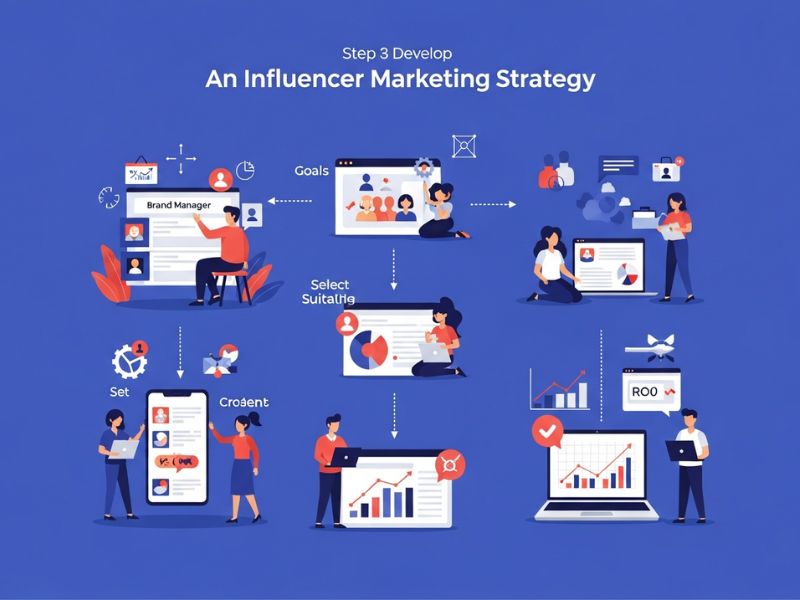
Building a solid influencer marketing strategy goes through various stages:
Define Your Marketing Goals
First, determine what your brand seeks to accomplish. Goals could involves:
- Growing brand awareness.
- Driving website traffic.
- Promoting a product launch.
- Boosting social media engagement.
Concrete objectives will make your influencer campaigns focused and measurable.
Know Your Target Audience
Knowing your audience is important. A well-worded influencer marketing plan will take into account the fact:
- Age, location, & demographics.
- Interests & hobbies.
- Buying habits & preferences.
Reaching the correct audience means influencer campaigns relate with those who are most likely to engage & convert.
Find the Right Influencers
The right influencers are the heart of any strategy. Look for influencers who:
- Align with your brand values.
- Have high engagement rates
- Talk to your audience person-to-person.
Consider Many Kinds of Influencers:
- Nano Influencers – 1K–10K followers, high trust, & local reach.
- Micro-Influencers – 10K-100K followers, great focused engagement (usually a niche).
- Macro Influencers – 100K–1M followers, and range of coverage.
- Mega Influencers: 1M+ followers and mass exposure.
Plan Your Influencer Campaigns
Once you’ve chosen your influencers, be thoughtful about how you plan your influencer campaigns. Decide on:
- Types of content (video, images, reels, stories, blogs)
- Messaging and brand tone.
- Posting schedule and frequency.
- Call-to-action for users.
With a great campaign, you can be sure that all things stays on brand and in line with what you are trying to accomplish marketing-wise.
Create Engaging Content
Content is the lifeblood of influencer marketing. Work with influencers on creating genuine and original content. Genuine content is relatable and will get your followers to open up to what you have to offer.
Tips for content creation:
- Allow influencers creative freedom.
- Storytelling NOT salesmanship.
- Use high-quality visuals.
- Include product demonstrations or tutorials.
Set Budgets and Compensation
Your influencer marketing plan should have explicit budgets. Compensation may vary depending on:
- Influencer size and reach.
- Type of content requested.
- The duration and selectivity of the campaign.
How they can look: Flat rates Performance-based Model products. Budget planning ensures the smooth working relationship between the brand and influencer never breaks down.
Track Results & Optimize
For “influencer campaigns”, list the main Performance Indicators (KPIs) by which achievement can be measured:
- Add a new row.
- Engagement rate (likes, comments, shares).
- Website traffic & conversions.
- Follower growth.
- Sales generated.
In terms of data analysis, the processing of information is used to tweak future campaigns so that they perform better and offer higher ROI for brands.
Tips for Effective Brand Collaborations
Brand collaborations are when you partner with or provide value for a business as an influencer. To make collaborations successful:
- Select influencers that represent your brand values.
- Set clear expectations & deliverables.
- Keep in touch while you campaign.
- Encourage creative input from influencers.
- Monitor performance and report feedback afterwards.
Successful collaborations with the brand establish trust among influencers and their followers, leading to long-term relationships.
Types of Influencer Campaigns
Some influencer campaigns you can run based on your marketing objective. Determining which type to use depends on your strategy, audience, and business goals. The following types of influencer campaigns are the most popular:
Product Reviews
Product review campaigns are when influencers test your product and provide their honest thoughts to their followers. This trust factor is key; genuine opinions are worth so much more to followers than straightforward advertising. Product reviews are particularly effective for new product launches or when there is novelty to market to a niche audience.
Sponsored Posts
Sponsored posts are content that influencers create on their own, and it is paid for to promote your brand directly to their audience. These posts are through images, videos, reels, or stories. Sponsored content enables brands to have a degree of control over the messaging but retain an influencer’s authentic voice.
Giveaways & Contests
Giveaways/contests’ goal is to spark followers’ engagement and attention. They’re hosted by influencers who tell their followers to like, share, or comment on a post for the chance to win. Not only does this kind of campaign provide brand exposure, but it also increases the number of followers and hit rates.
Affiliate Marketing
The campaigns in question are affiliate marketing ones, where influencers earn a cut of product sales they help drive. This is performance-based, so they can sell more and earn more. This particular form of marketing actions drives the influencer to advertise products more effectively that guarantees measurable ROI for brands.
Event Promotion
Influencers attend events, product launches, or brand activations and create content around them as part of an event promotion campaign. A campaign can do a lot of things: It can create buzz, drive attendance, and show off your brand in a live or authentic environment.
Measuring The Success of Your Influencer Campaigns
Monitoring metrics are an indispensable part of any successful influencer marketing campaign:
- Rate of engagement = interactions total ÷ the number of followers 100
- Sales ÷ Clicks are conversion rate × 100
- Reach = how many people the post reached.
These can be identified so that business can assess their ROI & make data-driven decisions for future campaigns.
Common Mistakes to Avoid When it Comes to Influencer Marketing
Mistakes can occur even when there’s a strategy in place. Avoid these common pitfalls:
- Collaborating with the Wrong Influencers.
- Caring too much about numbers Overemphasizing follower count (compared with engagement).
- Ignoring campaign performance metrics.
- Overly controlling influencer creativity.
These pitfalls should be avoided for influencer campaigns to maintain authenticity and effectiveness.
Emerging Trends in the Strategy of Influencer Marketing
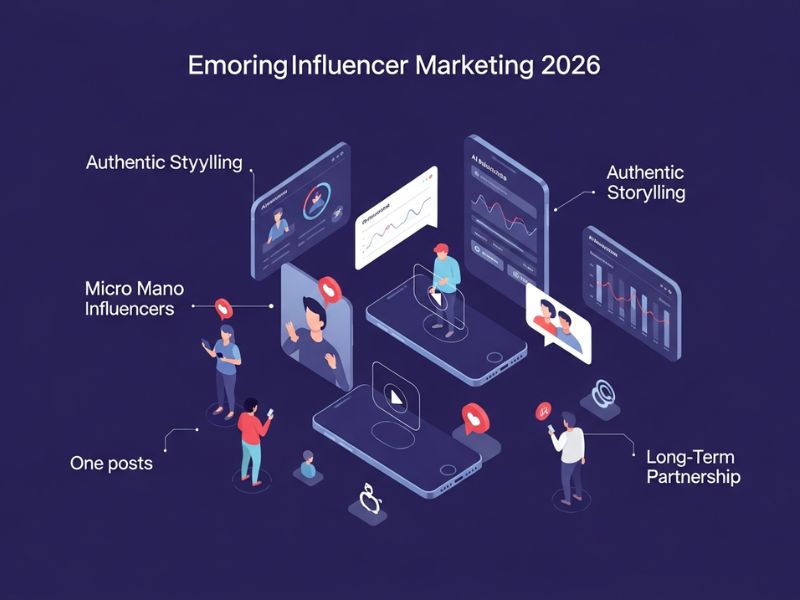
Influencer marketing is evolving. Key trends for 2026 include:
- Social platforms will be taken over by short-form video content.
- The Emergence of Micro and Nano Influencers: A New Approach to Niche Marketing.
- Increased focus on authentic storytelling.
- Use of AI as campaign tracking and optimization tools.
- Partnerships, not just one-offs.
Brands that cater to these trends in their influencer marketing will have a leg up.
Realize Your Brand’s Influence through Influencer Marketing
A good influencer marketing strategy allows brands to:
- Expand reach and awareness.
- Build trust & credibility.
- Engage people with the best campaigns.
- Influence sales with real-time, brand-partnered content.
Whether you’re launching your first campaign and refining ongoing efforts, strategy, planning, & execution are everything.
Conclusion
“Influencer marketing” isn’t just a fad; it’s an amazing method to expand your brand in 2026 & beyond. Through purposeful influencer campaign planning, partnership with the correct influencers, compelling & relevant content creation, & tracking results, brands can find long-term success.
Moreover, targeted messaging, & clear communication are the keys to running successful brand partnerships. With a solid approach, influencer marketing is an effective means of increasing engagement, brand affinity, and sales.
FAQs
Q1: How would you define an Influencer marketing strategy?
An “influencer marketing strategy” is a plan that brands create to work with influencers & reach some marketing aim, like getting brand awareness, engagement, and sales.
Q2: How do brands execute influencer campaigns?
Campaigns: How brands choose influencers, draft content, publish posts, and monitor engagement, reach or conversions.
Q3: What are brand collaborations in relation to influencer marketing?
Brand collaborations are alliances between a company and an influencer to represent the business and its products or services authentically.
Q4: How can I determine if influencer campaigns are successful?
Gauging success with KPIs like engagement rate, reach, conversion, and ROI.
Q5: Which influencers make the most sense for my campaign?
Select influencers with an audience that reflects your target, content that resonates with your brand, and holds sound engagement records.