A good LinkedIn marketing strategy can really change the game of your business, and I know it from experience, not theory. Everyone else creates a LinkedIn profile, posts once or twice, and gets some likes from colleagues before giving up quietly. What they’re missing isn’t luck. It’s a plan.
LinkedIn is not Instagram or Twitter. It’s not killing time for the people scrolling here. They are searching for answers, vendors, partners, and ideas. Everything that you need to show up changes from that point.
Why LinkedIn Actually Works (When You Use It Right)
‘ll be sure to be straight with you. The difference comes down to having the right LinkedIn marketing strategy and having a boring reputation. Humblebrags, corporate fluff. An occasional “I’m so honored to announce…” post. And yes, that stuff exists. But, despite all the chatter, beneath it all is a platform that quietly captures more B2B revenue than nearly anything else in digital marketing.
More than 80% of social media leads for B2B businesses are generated on LinkedIn. An average user holds massive buying power compared to the audience of different platforms. With LinkedIn, you can build up trust before making a request, unlike Google ads or cold email. It is that commitment of continuous content creation for months that ultimately converts followers to customers.
ts memory is also quite good. When you show up regularly, it is noticed. It rewards accounts that create authentic engagement, meaningful comments, shares, and saves. You don’t even need a huge following to start getting traction. You need relevance and consistency.
LinkedIn Branding Starts Before Your First Post
This is what most businesses do wrong. They dive into content without clarifying the basics. Branding is not just your logo and banner but rather the impression someone gets when they visit your profile for the first time. If you’re building your presence as an independent professional, this becomes even more important. For a deeper breakdown, see our guide on LinkedIn for freelancers and why it matters.
Begin with your business profile. Write an “About” that speaks to your ideal customer rather than just explaining what you do. Focus on Your solution, not when you started your business. Fill out all fields including industry, company size, website and specialties. How you show up in LinkedIn’s internal search relies on the same factors. If you want a step-by-step breakdown, read our complete guide on how to create a stunning LinkedIn profile for career growth.
Then think about your voice. Are you a straight-talking expert? The empathetic educator? The bold contrarian? Pick a lane & stay in it. A lot of the brands building genuine audiences on LinkedIn don’t try to sound impressive; they try to be useful. There’s a big difference.
One thing: there are too few brands in the world; your executives and senior team members are brand assets. If a founder or VP posts thoughtful content, it gets in front of people that a company page post never would. Promote visibility of your leadership. Make what they post fit into your larger brand narrative.
Building a Content Plan That Doesn’t Burn You Out
And here’s the thing about content: you don’t have to post every day. You want to make sure your posts are good and frequent enough so that people remember you’re there.
For most companies, the sweet spot is three to five posts per week on the company page. Mix your formats. Native text posts and carousel documents (PDFs uploaded directly to LinkedIn) typically outperform external links, as these formats prevent people from leaving the platform. LinkedIn rewards that. If you want more tactical ideas, check out these proven LinkedIn posting strategies that increase engagement.
The effective social media framework is simple: four out of six posts should be something truly educational or interesting. One should be some sort of soft story (a client win, a lesson learned whatever!) and the final one a clear promotion. This ensures that your audience does not view you as a salesperson, which keeps them engaged with your content.
What topics work? Tactical guides, no-bullshit reviews, behind-the-scenes tales, data analyses, common traps in your industry, contrarian takes. Anything that can make a person stop scrolling and say, “I needed to see this today.”
Three to five hashtags still count per post; they should be hand-picked based on what your following is actually engaging with.
LinkedIn B2B Marketing: The Tactics Worth Your Time
f you’re selling to businesses, LinkedIn marketing strategy offers targeting options that no other social platform can even touch. You can target people by title, seniority, company size, industry, and even the exact company they work for.
A few things that keep pointing:
LinkedIn newsletters are massively underused. When a reader subscribes, they’re notified in their e-mail each time you publish. That’s a direct line to your most engaged audience, and it’s free to get started.
f your team does any outbound, Sales Navigator pays for itself. The filtering on its own can save hours of manual prospecting, and the lead recommendations get smarter the longer you use it.
Sponsored content with lead gen forms is very effective if you have something that your users will fuckin value be it a guide, a webinar, or an audit for free. Profiles pre-fill the forms, so conversion friction may be as low as none.
And don’t underestimate just commenting. Leaving insightful, meaningful comments on posts by industry leaders and potential clients gets your brand in front of the right people, at no cost. It creates a connection before you ever send a message. Strategic engagement is a powerful networking tool. Here’s a full guide on why LinkedIn networking matters and how to do it right.
What to Actually Measure
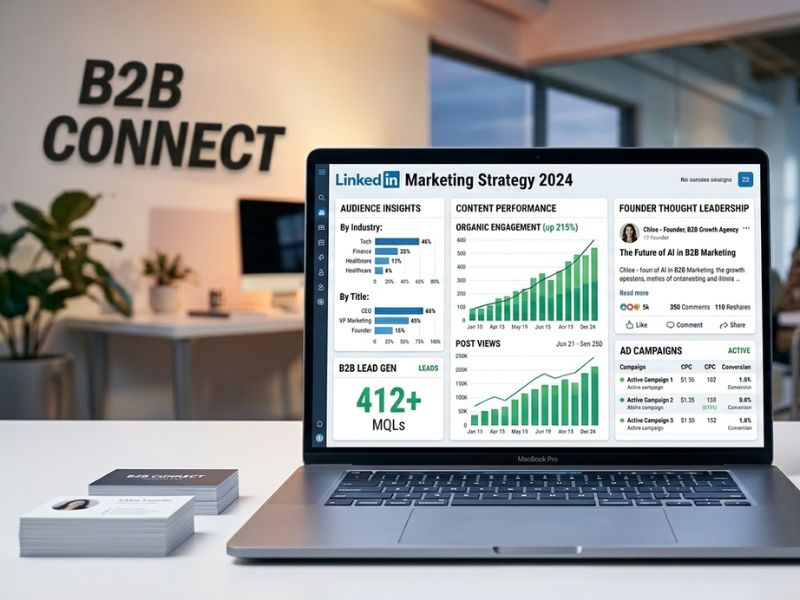
Impressions are nice, but don’t say much. In the early periods, engagement rate is the real KPI. A post that has 400 reach and about 30 comments is doing something correct. A post seen by 4,000 people and liked by two is not.
Be aware of how various followers you are gaining or losing every week. The formats and topics that reliably generate comments versus likes. Over time, you’ll have a clear learning of what works for your particular audience & that experience is worth more than any cookie-cutter best-practice guideline.
For paid campaigns, measure cost-per-lead & lead quality separately. LinkedIn leads cost more upfront. But for B2B companies, the larger deal sizes and close rates generally tip the math in your favor. If it helps, don’t compare LinkedIn ads to the benchmarks you’d use for Facebook.
Mistakes That Are Easy to Make (And Easy to Avoid)
Brand killer: generic connection requests. If you’re gonna reach out to someone, say something authentic. Mention something they posted, an issue they discussed, or a shared contact. Make sure you capitalize on making a good impression because people don’t have their own memories.
Neglecting your company page because “personal profiles have more reach” is number-crunching short-sightedness. Both serve different purposes. Your company page is where prospects go to vet you before a sales call, and it builds institutional credibility. Keep it alive.
And don’t overlook the power of employee advocacy. The potential for your message to spread is exponentially higher when your team shares company content–it can be 10x or more overnight. Make it easy for them. Give them something they actually want to share.
Frequently Asked Questions
Q1: What is the ideal frequency of posting on LinkedIn?
Three to five posts per week for company pages. For people, two-three times. Quality beats quantity each time.
Q2: Which kind of content can find success on LinkedIn?
Formatting text posts, carousels, and shorts is important. All educational, opinionated, and story-driven content work better than promotional material.
Q3: Should small businesses invest in LinkedIn ads?
Yes, provided you have a good offer and a defined audience. Focus on the bottom of the funnel, activity first $500-$1K/month, make plans to scale.
Q4: How fast will I see results?
t takes three to six months for the organic growth that is beginning to happen in your business. Paid campaigns can and usually move faster, but organic momentum is what adds up over time.
Conclusion
Many businesses are leaving money on the table by not paying great attention to LinkedIn. In reality this is just a phrase. Having a simple plan places you better than most people. Kick-off with the basics, be consistent and iterate as you learn. That’s truly all it takes.