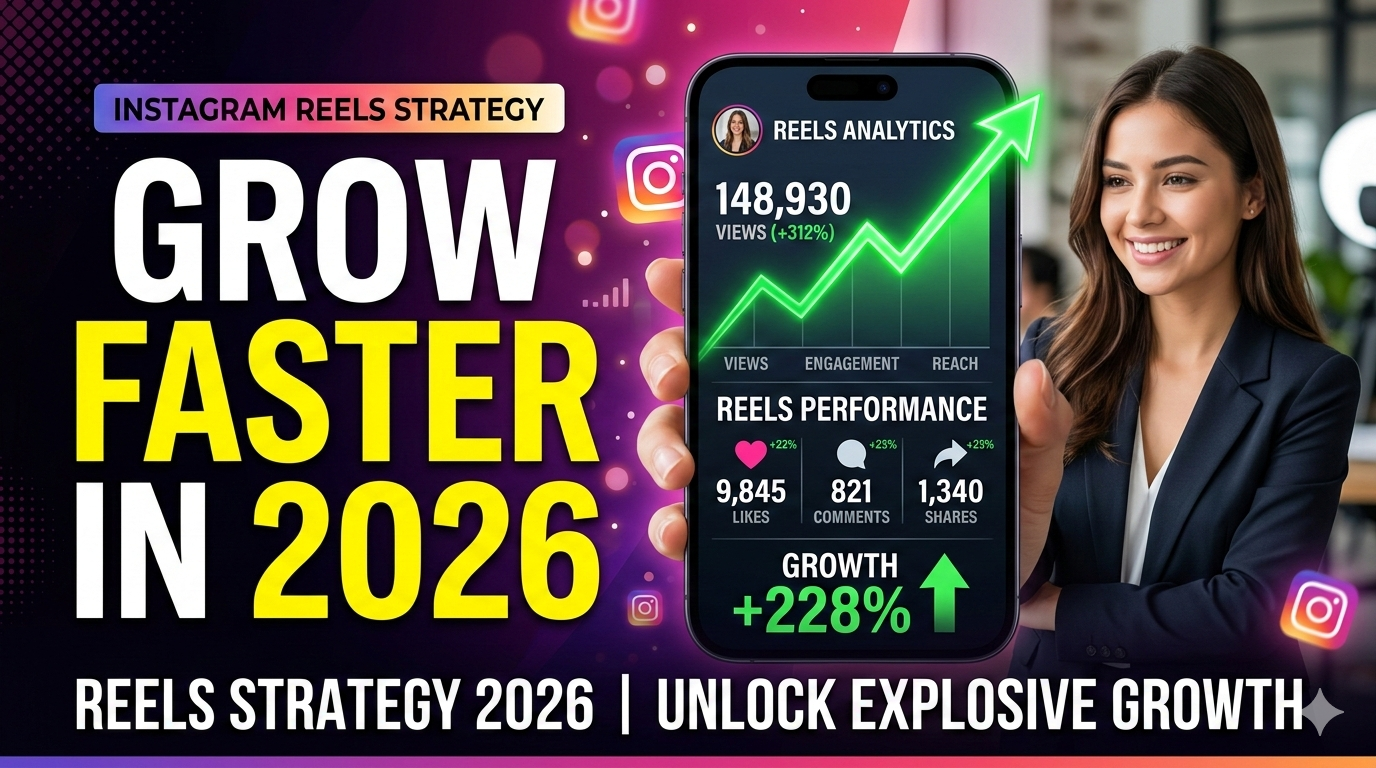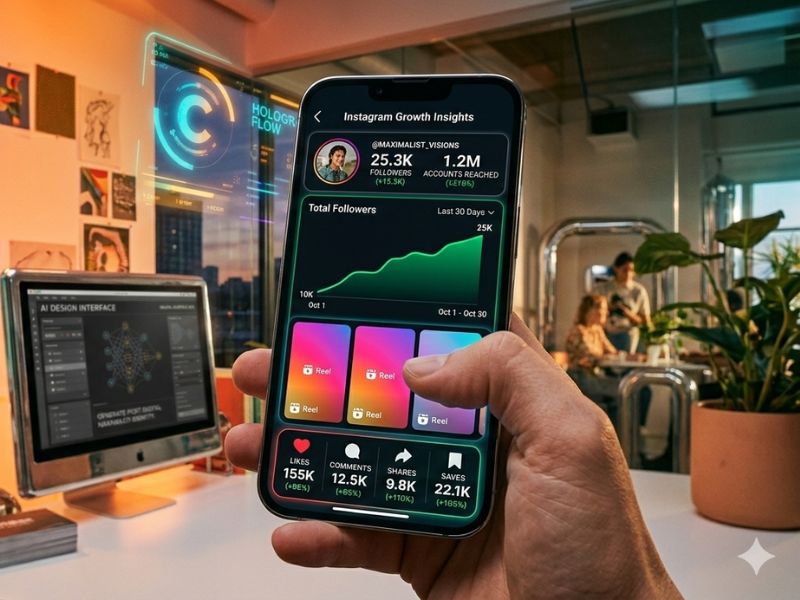
It is a mysterious engine that helps boost your Instagram account and determines who sees your content and when. If you’re a brand, creator or small-business owner, knowing how the algorithm works is the most powerful way to increase your Instagram reach and build an engaged audience.
In this complete guide, we’ll break down exactly how the Instagram algorithm works on each of the different surfaces, which signals matter the most, and how to set up a winning Instagram content strategy to get your posts in front of the right people.
What Is the Instagram Algorithm?
The Instagram algorithm, an umbrella term for all the classified content across Feed, Stories, Reels, and Explore tab on the Search tab, is not a single working system rather an array of machine-learning classifiers that get content ranked or filtered. Meta (Instagram’s parent company) has also verified that each surface uses its own unique set of ranking signals. The algorithm anticipates the likelihood that one specific user will interact with a particular piece of content and then arranges posts accordingly.
The chronological feed of yesteryear was replaced by the relevance-focused algorithm we see today. These signals mean that, if a post is well-optimized for time of day and the audience in question, and it receives strong engagement signals early on in its life cycle, that single post will outperform bad content every time regardless of how many followers are attached to said account.
How the Instagram Algorithm Ranks Feed and Stories
Instagram’s ranking model, for your main Feed and Stories, is based on five core signals:
1. Interest
The algorithm looks at what you’ve liked, saved, commented on, and watched previously, as well as the time you spent on the post, to gauge how much you’d like this new one. Someone who is often engaging with travel photography will see more of it in his Feed.
2. Relationship
The posts from accounts that you comment on, tag, & direct-message will rank higher. By developing a genuine community relationship, you will not just benefit through practice but also gain an advantage via the algorithm.
3. Recency
New content is generally more advantageous than old. By posting at times when your audience is most active, you can achieve a dramatic increase in your Instagram reach within the first hours of posting.
4. Frequency
How often a user opens Instagram affects what they see. Frequent users see content ranked by relevance, while users who open the app less often see only the most highly predicted posts.
5. Following Count
When users follow a lot of accounts they would see lesser content from any one creator. This means creating content that stands out in news feeds that are already crowded with other content
Reels Algorithm: The Key to Expanding Your Instagram Reach
Reels use a different discovery model than Feed posts. Though the content on Feed gets shown to existing followers in most cases, Reels are actively distributed to non-followers using interest graphs. Instagram’s own internal data tells us that Reels get 22 times more reach than a static post, making video content the backbone of any successful Instagram content strategy.
The Reels algorithm favors these signals: watch time and replays, likes and shares (especially DM shares), audio usage (trending sounds get a nudge), and originality (stuff that’s not from other platforms with watermarks is penalized).
Pro Tip: Capture your viewer in the first 1–2 seconds. The algorithm registers “Average Watch Percentage” the better it is, the wider your Reel will be spread.
Building an Effective Instagram Content Strategy
An Instagram content strategy based on data is not only about what you publish but also how. Here are the top ways to drive serious impact, based on how the algorithm determines what content gets shown.
Consistency Over Quantity
In fact, the algorithm favors accounts that post often. Instead of whipping out posts daily and running out of gas, commit to a sustainable schedule even three to four quality posts each week. The algorithm to predict engagement scores becomes stronger for accounts that have predictable posting frequency patterns.
Prioritize Saves and Shares
And while’helps like this are public vanity metrics, the Instagram algorithm prioritizes saves and shares more highly since they imply deep value. Focus on educational carousels, step-by-step how-tos, infographics, and practical tips that followers will want to save for later. These “bookmark-worthy” posts communicate authority to the algorithm, and can move the needle on your organic Instagram reach by a long shot.
Optimize Your Caption Strategy
Captions aren’t fed directly into the ranking algorithm, but they do inspire comments and conversions, and that factor is considered. Use captions that provoke real questions, personal stories, or new perspectives. It is not about a one-way broadcast, it is about evoking two-ways dialogue.
Use Relevant Hashtags Strategically
On Instagram, hashtags are content classifiers. Using 30 hashtags at most did not achieve much, & studies indicate that five to 10 of the most relevant ones only deliver the best performance. Blend isolated hashtags (sub-500K posts) into the mix of more competitive tags to access niche audiences most likely to engage, elevating your position in the algorithm.
Post at Peak Engagement Times
The Instagram Insights (for Creator or Business accounts) will let you know when your audience is more active. When you post during these windows, your posts get the best chance of accumulating strong early engagement signals that tell the algorithm to distribute your content.
Common Algorithm Myths – Debunked
Myth 1: If you switch to a Business or Creator account, your organic reach decreases. This is false. Instagram has publicly confirmed that account type does not affect distribution. The key is content quality and engagement patterns.
Myth 2: Frequent posting adversely affects your performance. The algorithm does not punish frequency but rather frequencies of low quality. As long as every post engages your audience strongly relative to its size, the more often you post, the quicker you will grow.
Myth 3: Third-party scheduling tools have lower reach. The use of authorized scheduling tools via the Instagram API (remember: there are no third-party scheduler apps that aren’t connected through this closed system) is also said to have no personal impact on the algorithm.
Instagram Algorithm Trends and Updates in 2026
Instagram has been clear about the direction of its algorithm. CEO Adam Mosseri said the app is currently experimenting with ways to provide more equitable reach for smaller creators. The key updates include a clear move to promoting content from accounts that people don’t already follow (particularly in Reels and Explore), increased focus on original material as opposed to reshared or reposted content, and decreased reach for posts with external links in captions.
And on top of that, Instagram is expanding its “Not Interested” feedback loops so users can train their own feeds which means creating content that truly resonates with your ideal audience is more important than ever.
Conclusion
Instagram uses a set of rules that decide which posts people see. Those rules are not against you – they exist so that posts which people want find the people who want them. If you learn the main signals that the rules use, plan your posts with care and keep giving your specific group of people something useful, your posts will travel much farther without you paying for ads.
Quit looking only at big numbers that feel good – instead, aim for actions that the rules notice and boost – comments that matter, posts that viewers finish plus posts that viewers send to friends or keep for later. Open Instagram Insights, study what happens, change your plan with the numbers you see there and keep going.
Frequently Asked Questions (FAQs)
Q1: How does the Instagram algorithm decide what to show in the Feed?
Content that you might see on your feed is classified according to interest, relationship, recency, app usage and how many accounts you follow. After this classification, the contents that you are most likely to engage with are shown to you.
Q2: Does posting more often help increase my Instagram reach?
More posts only work when the quality remains high. Frequent low-quality content can hurt reach.
Q3: What type of content gets the most reach on Instagram in 2026?
Reels have the highest reach (especially if using trending audio). The other reason carousels perform better is due to higher engagement.
Q4: How can I improve my Instagram content strategy to beat the algorithm?
Prioritize saves and shares, posting frequency, relevant hashtags, respond early after posting and use Reels as part of your strategy.