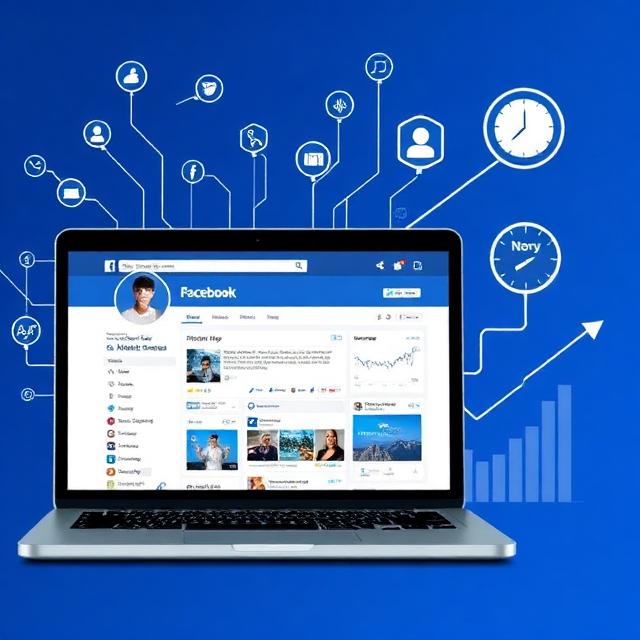
In 2026, Facebook follows a four-step ranking process: Inventory, Signals, Predictions, and Score to decide what appears in your feed. Facebook algorithm decides what your users see on their News Feeds and is one of the most influential spheres in social media marketing. It’s important to know how this works if you want to grow and keep your Facebook reach and engage with your audience in a meaningful way.
Whether you’ve seen a dip in your organic reach or want to improve the performance of an already successful post, you’re not alone. Facebook’s algorithm has changed a lot over the years, and keeping abreast of its latest updates could mean the difference between success and failure on the platform.
What Is the Facebook Algorithm?
The Facebook algorithm is an intricate process that Meta uses to decide which posts show up in each user’s News Feed and the order in which they are presented. But instead of organizing itself chronologically, Facebook employs a machine learning algorithm and some not-insignificant computational power to predict what content each user would like most to see.
This ranking system considers thousands of signals to determine what people want to see, and the order in which it appears for posts, such as who posted it, when it was posted, what type of content it is, and how other users have interacted with it. It is all in the hope of keeping users on the platform longer by showing them the content they are most likely to engage with.
How Does the Facebook Algorithm Work in 2026?
Facebook’s algorithm (which operates according to four essential ranking signals) decides what content is most important in the eyes of people browsing their feeds:
1. Relationship and Interaction History
Facebook shows you what people and pages don’t want to see. If you’re someone who constantly likes, comments on, and shares posts from a specific friend or business page, then you’ll see more of their content. This is why it’s so important to cultivate real relationships with your audience if you want to increase your Facebook reach.
The service logs all of your interactions, from direct messages to profile views, to provide a detailed picture of your relationships. Stories from your nearest and dearest will nearly always trump stories from pages you don’t frequently interact with.”
2. Content Type Preference
The algorithm learns what types of content you like — whether that’s videos, photos, links, or text posts. If you are always watching videos, Facebook will keep showing you more videos. And the more you pay attention to images, the more visual posts will fill your feed.
For the marketers, that means having a variety of strategies for your content is key. Test different formats and find what works well with your audience. Facebook marketing tips can teach you how to build a balanced strategy that takes into account different user preferences.
3. Post Engagement and Recency
Priority usually goes to recent posts, but metrics of engagement are even more important. Posts with higher engagement rates — likes, comments, shares, and saves — tell the algorithm that a piece of content is worth seeing by more people.
But Facebook has also grown more sophisticated at catching engagement bait and fake engagement. Genuine interaction from genuine users will always carry more weight than numbers on a page that anyone can fabricate.
4. Relevance Score
Facebook gives every post a relevance score depending on how much it matches a user’s interests or past behavior. This score takes into account relevancy of the topic, sentiment analysis, and propensity to engage.
Posts about things you’ve previously shown an interest in will rank better, and so, as a result, niche content performs much better than generic content. One thing to keep in mind is that relevance is everything, and the better you know your audience’s preferences, the more content with elevated relevance scores you can create.
Key Facebook Engagement Tips to Beat the Algorithm
Now that you know how does Facebook algorithm works, here are some proven tactics which can help you boost your reach on Facebook and get more engagement.
Create Conversation-Worthy Content
The algorithm prioritizes posts that can trigger meaningful interactions, especially comments. According to Hootsuite’s social media research, the posts that generate conversation get a much farther reach than those with passive engagement.
Bring up questions, interesting thoughts and ideas, or things that are good to start a discussion from. The more people comment on your posts, the more widely Facebook will spread them among other users.
Publish When Your Readers Are Online
It does matter when it comes to initial engagement, as that engages an algorithm that tells the algorithm your content is worth promoting. Utilize Facebook Insights to learn when your subscribers visit Facebook.
I’ve found out as a rule of thumb that posting during lunch (12-1) and evenings (7-9) work best, but my audience might be different than yours. Experiment with different posting times and track your results to discover which works best for you.
Prioritize Video Content
Video still rules for Facebook, with native videos earning 135% more organic reach than pictures. Facebook Live videos get even more engagement; they send notifications to followers when you go live.
Produce compelling short videos that hook the viewer in the first 3 seconds. Include captions for viewers who are watching without sound, and keep videos short: Most popular Facebook videos are under two minutes.
Encourage Meaningful Interactions
Stop asking for likes and shares (which Facebook now downgrades under engagement bait), create content that naturally begets interaction. Post behind-the-scenes content, share stories, or showcase user experiences.
UGC and testimonials are super successful pieces because it’s real in feel & motivate community involvement. When readers tag friends in the comments or share their own related experiences, the algorithm perceives this as valuable, meaningful interaction.
Use Facebook Stories and Reels
Facebook Stories appear prominently at the top of News Feed, so they have prime real estate. Stories impose a sense of urgency with their 24-hour expiration and make for more relaxed, real content.
Facebook Reels have been gaining importance as Meta competes with TikTok. Reels get their own space in the app, and they often reach more than your current audience , too (great for growth).
Engage With Your Audience Promptly
The feature prioritizes pages that actively reply to comments and messages. When you break through to your audience promptly, it is an indicator that you are authoring content worth sharing and promoting: community content.
Engage comments in the first hour after you post, for maximum visibility. This early engagement surge can make a big difference to the size of the audience Facebook sends your way.
Avoid Clickbait and Engagement Bait
The ability of Facebook to detect and punish nefarious tactics has improved. Avoid posting content that:
- Specifically requests likes, shares, or comments.
- Clickbaiting headlines with no valuable substance.
- Refuses to even include information in a fishy attempt to get clicks.
- Uses reaction-baiting tactics.
Rather, concentrate on producing content that has true value and quality that garners engagement through natural methods. Manipulation ultimately gets trumped by quality.
Leverage Facebook Groups
The algorithm favors Facebook Groups as they promote community and meaningful engagement. You can grow this number by creating or joining groups of shared interest.
Share content that can be useful to your audience in groups where your prospects spend time, but without specifically marketing what you offer. 2) Getting to know others in groups can get your page content more exposure.
Optimize Your Posting Frequency
Even assuming people aren’t unfollowing you due to their feed getting clogged with your content, they might be tuning out from fatigue and engaging less when you do post. On business pages, most social media specialists suggest that 3-7 posts per week should be shared.
Focus on quality over quantity. Some posts won’t be equal to one very engaging post. Keep an eye on your analytics to locate the sweet spot for your audience.
Cross-Promote on Other Platforms
While that might not make sense, sharing your Facebook content to other social sites can increase traffic and engagement. If you have a robust presence on Instagram or another platform, get your followers there to interact with your Facebook content.
This is a cross-platform approach that can help bootstrap early engagement, indicating to the algorithm that your content is good and should be promoted to reach more people.
Understanding Facebook Reach: Organic vs. Paid
Facebook reach indicates the number of individuals who have viewed your content. There are two main types:
Organic Reach: Organic reach is the number of people who see your content without paid distribution. Organic reach has been dropping drastically in the last few years as Facebook shifts its focus to content posted by friends and family. Nowadays, business pages are lucky to reach between 5-6% of their followers organically.
Paid Reach is the number of people who see your content when paid advertising is involved. Though organic reach has decreased, the ad platform on Facebook is one of the strongest platforms to target a certain demographic.
The best Facebook tactics use PR and advertising hand-in-hand. Use the organic content to establish relationships and test which kind resonates with your audience, then amplify the best-performing content through targeted advertising.
Common Mistakes That Hurt Your Facebook Reach
Cease making these mistakes that are killing your visibility:
Posting Low-Quality or Irrelevant Content
The algorithm can recognise when users are fanning through your content too quickly, or if they have consigned you to their “hide pile”. This negative feedback is really going to drag your reach down. Each post must add real value to your audience.
Ignoring Analytics
Facebook has great analytics tools, but many marketers never see them. Check your Insights every so often to get a sense of what’s working and what’s not. Double down on what’s working and delete what’s not.
Overlinking to External Websites
Using useful outside resources for the information you share is great, and although it may seem counterintuitive to share them on Facebook (since they take people off the platform), in reality, Facebook de-prioritizes posts with outbound links. (If you really have to link out, maybe relegate them to the comments and take advantage of how robust Facebook’s own features can be.)
Neglecting Mobile Optimization
More than 98% of Facebook users are mobile. If your mobile site doesn’t work, whether that’s a photo, a video, or a link to an article, you are excluding most of your potential audience.
The Future of the Facebook Algorithm
As we step into 2026, the Facebook algorithm is again changing. Meta is increasingly focusing on:
- AI-driven content recommendations outside of your network.
- Short-form video content to rival TikTok and Instagram Reels.
- Writing: being authentic and transparent in content creation.
- Social features that promote real connections.
Keeping updated on these changes and adjusting your approach as necessary will allow you to maintain high levels of Facebook reach no matter what direction the algorithm takes.
For more insight into social media strategy across various platforms, consider the differences between Facebook and Instagram to discover which platform is best suited for your business needs.
Frequently Asked Questions (FAQs)
How frequently does Facebook update its algorithm?
Facebook adjusts its algorithm all the time, sometimes daily. Large updates that impact reach occur a few times per year; concentrate on good content, not gimmicks.
Why did my reach drop all of a sudden on Facebook?
An abrupt drop in reach can occur as a result of algorithm updates, weak content, poor timing, engagement bait penalties, or policy violations. Review Insights regularly.
Do boosted posts reach more people?
Boosting posts can help organic reach by encouraging engagement, drawing in new followers, and signaling value, but don’t try to uplift lame copy this way.
When is the best time to post on Facebook for maximum engagement?
While the best posting times can differ, posting at any time from 9 AM to 3 PM during weekdays are decent time. Take a good look at Facebook Insights, try different schedules, and adhere to weekly habits.